


As an Amazon Associate, Party Baby Seattle earns from qualifying purchases. Product ideas and setup recommendations are shared for informational and inspirational purposes only.
Play kitchens for toddlers can turn a quiet corner into a grocery store, restaurant, coffee shop, or family kitchen before breakfast is over. The harder part is choosing between compact plastic kitchens, furniture-style wooden sets, and larger designs with several pretend appliances.
These five picks cover different spaces, materials, and play styles. We’ve styled over 700 events, and clear, age-appropriate activity areas can make play spaces easier for kids to enjoy. Whether you need something compact for a playroom wall or have room for a larger corner kitchen, the differences below can help narrow the choices.
Table of contents
- Our Top Picks in Play Kitchens for Toddlers
- What Matters in Play Kitchens for Toddlers
- Best Overall: Step2 Fun with Friends Kitchen
- Best for Ages 1 to 3: Fisher-Price Laugh & Learn Learning Kitchen
- Best for Small Spaces: WoodenEdu Wooden Play Kitchen
- Best for Realistic Play: ROBUD Wooden Play Kitchen
- Best Splurge: Best Choice Products Cottage Corner Play Kitchen
- Setting Up Play Kitchens for Toddlers at Home
- Frequently Asked Questions
Our Top Picks in Play Kitchens for Toddlers
- Best Overall: Step2 Fun with Friends Kitchen
- Best for Ages 1 to 3: Fisher-Price Laugh & Learn Learning Kitchen
- Best for Small Spaces: WoodenEdu Wooden Play Kitchen
- Best for Realistic Play: ROBUD Wooden Play Kitchen
- Best Splurge: Best Choice Products Cottage Corner Play Kitchen
- Shop All Play Kitchens for Toddlers on Amazon
What Matters in Play Kitchens for Toddlers
Start with the space the kitchen will actually occupy, because doors, knobs, accessories, and kids all need room beyond the basic footprint. Age guidance matters too, particularly when a set includes smaller food pieces, cookware, or removable accessories. Plastic kitchens offer a different construction style, while wooden designs tend to have more of a furniture-like appearance. Storage deserves attention because pretend food and cookware can quickly become part of the toy rotation. Assembly is another meaningful difference since larger wooden designs can involve more panels and hardware. Finally, consider which features give your child different ways to pretend, whether that means cooking, serving food, washing dishes, or opening appliances.
Best Overall: Step2 Fun with Friends Kitchen
The Step2 Fun with Friends Kitchen lets kids move between cooking, serving, and organizing pretend meals, with accessories included for those different activities. The different play areas give kids several ways to build pretend kitchen routines. That range of play makes it a versatile option for everyday pretend kitchen play.
- 40.88 inches high, 35.75 inches wide, and 12.5 inches deep
- Manufacturer age range is 2 to 10 years
- 25-piece accessory set included

💡 Pro Tip. Sort the kitchen pieces before starting assembly so you can move through the instructions in order. Owners consistently describe assembly as manageable, with multiple owners specifically calling the instructions clear or simple.
Best for Ages 1 to 3: Fisher-Price Laugh & Learn Learning Kitchen
The Fisher-Price Laugh & Learn Learning Kitchen gives younger toddlers a compact introduction to pretend kitchen play with lights, sounds, music, and hands-on activities. Its smaller format focuses on simple interactions rather than the larger appliance-style layouts of the other kitchens in this roundup. The included play pieces add another way for toddlers to interact with the kitchen as their pretend play develops.
- Measures 9 inches long, 9 inches wide, and 12.01 inches high
- Manufacturer age range is 6 to 36 months
- Includes lights, music, sound effects, and five play pieces

💡 Pro Tip. Turn on the sound features when introducing this kitchen instead of treating them as an extra. Owners repeatedly respond positively to the sounds, including feedback that they are enjoyable for babies and that the volume stays at a comfortable level.
Best for Small Spaces: WoodenEdu Wooden Play Kitchen
The WoodenEdu Wooden Play Kitchen takes up less floor depth than any of the full-size kitchens here, making its footprint the main reason it stands out. At 31 inches wide, it can stay relatively contained along a wall while still providing a dedicated wooden kitchen for pretend play. A pretend coffee maker and gold faucet add recognizable kitchen details without requiring a larger footprint.
- 31 inches wide, 12 inches deep, and 38 inches high
- Manufacturer age guidance begins at 3 years
- Wooden construction

💡 Pro Tip. Take a quick look at the doors and main panels before starting the build. Owners generally describe the finished kitchen as sturdy, but several received kitchens with damaged doors, so spotting any shipping damage before assembly can save time.
Best for Realistic Play: ROBUD Wooden Play Kitchen
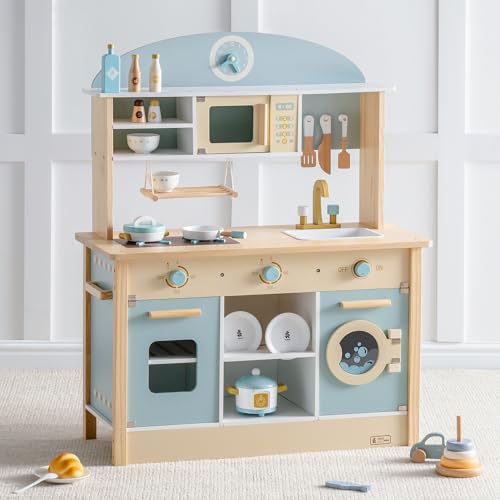
The ROBUD Wooden Play Kitchen gives kids several recognizable kitchen routines to act out instead of centering play around one main feature. Separate areas for cooking, baking, reheating, and washing dishes make it easier to imitate the activities they see in an everyday kitchen. The wooden design brings those different appliance areas together in one dedicated pretend kitchen.
- 31.3 inches wide, 14 inches deep, and 38.6 inches high
- Manufacturer age guidance begins at 3 years
- Pretend stove, oven, microwave, and sink areas
💡 Pro Tip. Sort the panels and hardware before starting this build. Some owners found assembly fairly easy, while others described it as laborious or found the instructions unclear, so organizing the pieces first can make the process easier to follow.
Best Splurge: Best Choice Products Cottage Corner Play Kitchen
The Best Choice Products Cottage Corner Play Kitchen is the only corner-style design in this lineup. Rather than concentrating play along one straight wall, the layout creates a larger kitchen-style area with activities arranged across the corner. The expanded corner configuration is the main distinction.
- Measures 39.5 inches long, 10.4 inches wide, and 36.75 inches high
- Corner footprint measures 28.5 by 28.5 inches
- Manufacturer age guidance begins at 3 years

💡 Pro Tip. Set aside a comfortable block of time for assembly rather than trying to fit it into a short window. Owners like the kitchen’s size once assembled, but multiple reviews describe the build as time-consuming and the instructions as difficult to follow.
Setting Up Play Kitchens for Toddlers at Home
Before choosing a permanent spot, think about how kids will move around the kitchen rather than looking only at the product dimensions. Appliance doors need room to open, and pretend food, dishes, and cookware tend to spread onto the surrounding floor once play gets going. A little clearance in front of the kitchen can make the entire setup more functional.
The layout of the room matters too. A shallow kitchen can sit against a playroom or family-room wall while leaving more open floor space for other toys. A corner kitchen asks for a different kind of footprint, but it can turn an otherwise unused corner into a defined pretend-play area.
Keep storage close to the kitchen instead of across the room. A basket or bin can hold loose food and cookware, while built-in cabinets can handle the pieces kids use most often. Giving everything a simple home also makes it easier for children to find what they want when they return to play.
For birthday play spaces, use the same idea of giving activities their own clear zones. Our first birthday party games guide has more ideas for age-appropriate activities, while our 2nd birthday gift ideas guide covers additional play-focused gift ideas.
Party Baby Seattle also offers soft play packages for celebrations that need a larger designated toddler play area.
Frequently Asked Questions
Play kitchens in this roundup start as early as 6 months based on manufacturer guidance. The Fisher-Price Laugh & Learn Learning Kitchen is rated for 6 to 36 months, the Step2 Fun with Friends Kitchen begins at 2 years, and the three wooden kitchens begin at 3 years. Manufacturer age guidance and the included play pieces should factor into the choice.
Neither material is automatically better for every play space. Wooden kitchens tend to have a more furniture-like appearance, while plastic kitchens offer a different construction style. Dimensions, features, storage, and available room are more useful deciding factors than material alone.
Leave enough open space for a child to stand in front of the kitchen and fully open its doors. Pretend food and cookware also tend to spread beyond the kitchen during play. Corner kitchens need additional room in two directions because of their configuration.
No, but a few accessories give kids more ways to cook, serve, sort, and build pretend meals. Some kitchens include a starter collection, while others leave more of those pieces to be added separately. The Step2 kitchen includes 25 accessories, while the Fisher-Price kitchen includes five play pieces.
Some are. Owners reported mixed assembly experiences with the ROBUD kitchen, including unclear instructions, while multiple Best Choice Products owners described its assembly as time-consuming and the instructions as difficult to follow.
Yes. The WoodenEdu kitchen has the shallowest depth among the full-size kitchens in this lineup at 12 inches and measures 31 inches wide. A corner kitchen uses the room differently and needs available space in two directions.
Disclaimer: All product recommendations, setup suggestions, and creative tips are provided for informational and inspirational purposes only. Party Baby Seattle is an independent publisher. We are not officially affiliated with, sponsored by, or endorsed by the specific brands or manufacturers featured in this article. Party Baby Seattle is not responsible or liable for the safety, durability, or real-world performance of any third-party products or gear mentioned. Always refer to individual manufacturer instructions, safety warnings, and official age guidelines before use.


