vewvwe

Best Ball Pits for Toddlers in 2026: Picks from 700+ Parties 

As an Amazon Associate, Party Baby Seattle earns from qualifying purchases. Product ideas and setup recommendations are shared for informational and inspirational purposes only.

Why trust us on this one? Ball pits are the absolute backbone of our events, something we style, fill, and clean every single weekend. Party Baby Seattle has delivered over 700+ parties for families and brands like the Seahawks and Google, which means we spend a lot of time helping parents pick wall heights, fill depths, and ball colors that match a theme. We know what washes clean, what holds its shape when toddlers dive in, and exactly how many balls a pit needs before it feels right.

One of our ball pit setups at a Seattle first birthday.

Our Top Picks

Here’s the thing nobody tells you before you buy a ball pit. The pit is the easy part. Almost every foam pit on the market is a variation of the same 35-inch round with memory foam walls. What separates a ball pit your toddler ignores by August from one that anchors your playroom for two years comes down to three unglamorous details, wall height, cover washability, and whether you bought enough balls. We’ll cover all three, plus the layout tricks that work best in real homes. And if you’re curious why this kind of play matters beyond the giggles, we wrote about what ball pits and soft play do for toddler sensory development.

Best Overall: SHJADE Foam Ball Pit

Party Baby Seattle event setup shown.

If we could only recommend one home ball pit, this is it, and the reason is boring in the best way. The walls. SHJADE’s memory foam sides are thick and firm enough for a new walker to lean on, grab, and belly-flop over without the whole pit folding like a taco, and the 12-month age label on the listing backs the claim. At 4.6 stars across 2,400+ ratings, with softness called out in Amazon’s own review summary, it’s the most-vetted foam pit in its class, and it comes in a 47-inch version when siblings arrive.”

  • Firm, tall foam walls that support pulling up and climbing in solo
  • 12-month age label that matches how families actually use it
  • Zip-off washable cover, the feature you’ll use most
Top Seller
SHJADE Foam Ball Pit for Toddlers - Grey

Soft Memory Sponge Round Playpen Ball Pool for Kids, Ideal Gift for Babies, Indoor and Outdoor Game, Balls not Included. 35.4"x 11.8"


10/20/2026 09:40 pm GMT

💡 Pro tip. Vacuum-packed foam pits arrive flat and need up to 72 hours to fully rise. Unbox it three days before the birthday, not the morning of. We learned this one the hard way so you don’t have to.

Best With Balls Included: Nuby Velvet Ball Pit

Party Baby Seattle event setup shown

Most foam pits ship empty, and the sticker hides a second purchase. The Nuby solves it, 200 balls in the box, a soft velvet-feel cover over supportive foam, and walls in the height range that suits babies and young toddlers. At 4.6 stars across 230+ ratings it’s the strongest pick for the 10-month to 2-year window, when the pit doubles as a safe, contained sitting space, and it photographs beautifully, which we say as people who stage these for a living. Its soft neutrals match nearly every palette in our first birthday theme guide.

  • 200 balls included, ready to play the day it arrives
  • Soft velvet cover over supportive foam, gentle for the youngest sitters
  • Neutral look that doesn’t fight your living room
Best With Balls Included
Nuby Velvet Ball Pit
200 Balls Included - Aqua & Gray
10/20/2026 08:38 pm GMT

💡 Pro tip. Even 200 balls fills a pit about halfway, and halfway is actually the sweet spot for babies. Deep enough for full sensory play, shallow enough that a seated 10-month-old stays visible and confident.

Best Budget: Eocolz Pop-Up Ball Pit Tent

Foam is lovely, but if you’re not ready to commit real money and permanent floor space, a pop-up pit is the honest budget answer. The Eocolz springs open in seconds, folds flat into a zipper bag, and adds a basketball hoop on the rim, which buys a shocking amount of extra play mileage from toddlers who discover dunking. It carries a 4.5-star average across 8,700+ ratings, the biggest review base of any pit in this guide. It won’t support a leaning baby the way foam walls do, so this is the pick for confident walkers, roughly 18 months and up. Pair it with a few ideas from our first birthday party games guide and you’ve got a full afternoon covered.

  • Pops open instantly, folds flat for the closet between sessions
  • Built-in hoop keeps older toddlers engaged after the novelty fades
  • Easiest option to bring to grandma’s
Best Budget
Kids Ball Pit Large Pop Up Childrens Ball Pits
Tent for Toddlers Playhouse Baby Crawl Playpen with Basketball Hoop and Zipper Storage Bag, Balls Not Included (1M Multicolor)
10/21/2026 05:40 am GMT

💡 Pro tip. Pop-up pits weigh nothing, which means enthusiastic kids can drag them mid-play. Set it on a rug rather than hardwood and the friction holds it in place.

Best for Two or More Kids: Hikiddy Large Ball Pit

The most common ball pit regret we hear from parents is buying one sized for one child when they have two. A standard 35-inch pit fits exactly one toddler and one argument. The Hikiddy runs 44 inches with room for more than 1,000 balls, folds flat between playdates, and holds a 4.7-star average across 560+ ratings, the strongest score in the size-up category. Two toddlers fit with room to argue about something else, and it packs down small enough to actually get stored, which the six-foot monsters never do.

  • 44 inches of pit, room for siblings, cousins, and the occasional parent
  • Folds flat despite the footprint
  • The closest thing to our rental setups you can own
Best for Two or More Kids
Large Foldable Ball Pit for Toddler Dog- 44in -Balls Not Include
Blue Baby Ball Pool with Playmat, Hold Over 1000 Balls, Play Pit for Kids Dogs Indoor and Outdoor Games, Party Toys Gifts
10/21/2026 04:40 am GMT

💡 Pro tip. Big pit, big ball count. A pit this size wants 500 to 700 balls before it feels full. Budget for at least two bulk ball sets or it will look like a kiddie pool at low tide.

Best Combo Set: Tiny Land Play Tent with Tunnel and Ball Pit

Somewhere around two, every toddler becomes a crawl-through-things machine, and the combo sets exist for exactly that season. The Tiny Land connects a pop-up tent, a mesh tunnel, and a ball pit into one circuit, holds a 4.7-star average across 870+ ratings, and folds into a carry bag when the living room needs to be a living room again. It’s the pick for families who want a full play circuit rather than a single station, and the tunnel stage pairs naturally with the crawl games in our first birthday games guide.

  • Tent, tunnel, and pit in one connected circuit
  • Breathable mesh so small explorers stay visible
  • Folds into a carry bag between adventures
Best Combo Set
Tiny Land Kids Play Tent with Tunnel
Pop-Up Tent & Ball Pit for Toddlers | Foldable Indoor Play Set With Carry Bag, Breathable Mesh Design, Easy To Assemble, Great Gift For 2 Year Old Girls & Boys
10/21/2026 05:39 am GMT

💡 Pro tip. Anchor the tunnel ends with the pit on one side and a cushion on the other. A free-floating tunnel migrates across the room with the toddler inside it.

Best Balls to Fill Any Pit: Amazon Basics BPA-Free Pit Balls

Custom ball colors from one of our themed setups.

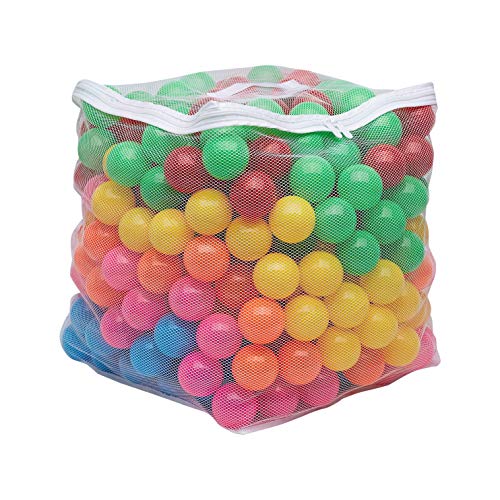
Whichever pit you choose, the balls decide how it feels. The rule we follow across hundreds of events, crush-proof or nothing. Cheap thin balls dent under one determined knee and never recover. These are BPA and phthalate free, spring back after a stampede, and come in pastel mixes that look intentional instead of arcade-colored. Around 2.75 inches is the safe standard size for toddler play, and this set hits it. For inspiration on color mixing, our 2026 Seattle party trends guide shows how we match ball colors to full party themes.

  • Crush-proof, they survive being stood on, sat on, and thrown at siblings
  • BPA and phthalate free for the crowd that still tastes everything
  • Pastel palette that photographs like a Pinterest board
Best Balls to Fill Any Pit
Amazon Basics BPA Free Ball Pit Balls with Storage Bag
Crush-Proof Plastic for Toddlers Kids 12+ Months Play, Phthalate Free, 6 Bright Colors, Pack of 400
10/21/2026 02:42 am GMT

💡 Pro tip. Cleaning day hack straight from our warehouse. Load balls into a mesh laundry bag, dunk in warm soapy water, rinse, and sun-dry. Twenty minutes, done, no scrubbing individual balls like a medieval punishment.

What Actually Matters When Choosing a Ball Pit

After hundreds of setups, we judge every ball pit on four core factors. First is wall strength, because toddlers don’t just climb into pits, they collapse over the edge, and soft-sided walls will fold right under them. Foam walls at least 12 inches tall are the standard for babies. Second is washability, because it’s not a matter of if it gets dirty, it’s a matter of when, and a cover that doesn’t zip off is a cover you’ll resent. Third is real capacity, meaning one 35-inch pit per toddler, so you should size up for siblings, or simply rent our six-footer with a slide for a big milestone day. Finally, look for ball quality, since flat, dented balls are the fastest way a great pit turns sad. Get those four things right and everything else is just décor.

Want the Giant Version for One Epic Day?

The Grand Luxe Ball Pit at a Seattle event

A home ball pit is for every day. For the milestone days, first birthdays, big family parties, corporate family events, Party Baby Seattle brings the full-scale version. Meet the Grand Luxe Ball Pit, a massive luxury pit with a slide, custom ball colors matched to your theme, with every detail handled for you. It’s the setup behind hundreds of Seattle’s most photographed first birthdays. Explore all our ball pit rentals.

And if the party’s still in planning, our sister shop Party Baby Essentials has instantly downloadable invitations for every theme in this guide. Browse first birthday invitations.

FAQs

What age can a baby start using a ball pit?

Most babies are ready around 6 to 10 months, once they can sit upright steadily. Choose a foam pit with supportive walls at that age, keep the fill shallow, and always supervise. Check your specific pit’s age rating, since recommendations vary by model.

How many balls do I need for a ball pit?

For a standard 35-inch toddler pit, 200 balls gives a shallow, baby-friendly fill and 400 to 500 feels genuinely full. Mid-size 44-inch pits want 500 to 700. Six-foot pits want 600 to 800. More balls means deeper play, but for babies, shallower is better.

How do you clean ball pit balls?

Wash them in batches inside a mesh laundry bag with warm soapy water, rinse well, and let them dry completely in the sun before refilling. Wash the pit cover per its care tag, and choose a pit with a removable machine-washable cover to make this painless.

Are ball pits safe for toddlers?

At home, with supervision, yes. Look for BPA-free and phthalate-free crush-proof balls around 2.75 inches, walls tall enough to keep a seated baby contained, and a fill level appropriate to age. Never leave a baby unattended in any pit. For party days, our luxury ball pit rentals come fully cleaned.

Disclaimer: All product recommendations, setup suggestions, and creative tips are provided for informational and inspirational purposes only. Party Baby Seattle is an independent publisher. We are not officially affiliated with, sponsored by, or endorsed by the specific brands or manufacturers featured in this article. Party Baby Seattle is not responsible or liable for the safety, durability, or real-world performance of any third-party products or gear mentioned. Always refer to individual manufacturer instructions, safety warnings, and official age guidelines before use.

Best Gifts for 3-Year-Old Girls in 2026, Picks She’ll Absolutely Love

As an Amazon Associate, Party Baby Seattle earns from qualifying purchases. Product ideas and setup recommendations are shared for informational and inspirational purposes only.

Three is when the lights come on, and a three-year-old girl will narrate the whole show, plots, characters, and firm casting decisions about who plays the dragon. The imagination has arrived, the opinions are official, and the gifts that win hand her a world to run.

One honest note before the list. Toys don’t have genders, and every pick works for any child who’d love it. This list leans into what’s most requested for birthday girls at three, dollhouses, dress-up, and pretend everything, and the all-kids list lives in our 3rd birthday gift ideas guide.

Our Top Picks

Best Overall: KidKraft First Dollhouse

Three is the dollhouse birthday. The pretend play that switched on at two now needs a stage, and a first dollhouse with chunky furniture becomes the daily theater for the next three-plus years. KidKraft owns the category for a reason, sturdy builds, open-back designs little hands can actually reach into, and rooms sized for the figures she already loves.

  • The stage for the storyline play that defines age three
  • Open-back layouts built for small reaching arms
  • The gift with the longest daily-use runway on this list
Best Overall
KidKraft Chelsea Doll Cottage Wooden Dollhouse with 16 Accessories
Working Shutters, Three Stories, Two Staircase, Balcony, For 5-Inch Dolls, Gift for Ages 3+
10/21/2026 08:38 am GMT

💡 Pro Tip. Coordinate this one with the parents, it’s the anchor-gift slot and the footprint is real. If the big house is claimed, dollhouse furniture and a family of figures is the perfect satellite gift, additions to the world always land.

Best Baker: Play-Doh Kitchen Creations Set

The bakery is open. Kitchen-themed dough sets, the cupcake stand, the ice cream counter, the oven, merge the two great loves of age three, pretend cooking and squishing things, and the pretend-restaurant service that follows is a full afternoon’s entertainment with you as the customer.

  • Two obsessions in one box, kitchen play plus dough
  • Builds the hand strength crayon grip needs later
  • The gift that comes with a job for the giver, order something
Best Baker
Play-Doh Kitchen Creations Busy Chef's Restaurant Playset
2-Sided Play Kitchen Set, Preschool Cooking Toys, Kids Arts & Crafts, Ages 3+
10/21/2026 05:44 am GMT

💡 Pro Tip. Add a plastic tablecloth to the gift bag. You’ve just given the parents permission to say yes to bakery day at the kitchen table, and that’s half the present.

Best Shopkeeper: Shopping Cart and Play Food Set

Three-year-olds run errands the way adults run marathons, seriously and with visible pride. A kid-sized shopping cart loaded with play food turns the living room into a grocery store, and store is one of the great three-year-old games, shopping, checkout, delivery, and restocking, on a loop.

  • Errand play is independence rehearsal
  • The cart hauls toys the rest of the week, secret cleanup tool
  • Plugs into every play kitchen and tea set she owns
Best Shopkeeper
Jovow 102pcs Kids Shopping Cart Trolley Play Set with Pretend Food
Perfect for Ages 3+ Pretend Play and Role-Playing Games
10/21/2026 07:40 am GMT

💡 Pro Tip. Save a few real, empty food boxes, mini cereal, pasta, and add them to the gift. Real packaging is treasure to a three-year-old shopkeeper, and it makes the store feel legitimate on day one.

Best Dress-Up: Princess Dress and Accessories Set

At three, dress-up needs no occasion, the gown goes to breakfast, the park, and possibly the dentist. A quality non-licensed princess set with a dress, shoes, crown, and wand delivers the transformation without the character lock-in, she gets to be her own princess, and it survives more than one season of obsessions.

  • Self-serve transformation, elastic and velcro only
  • Non-licensed means it outlasts the current movie
  • The twirl photo is the party photo

💡 Pro Tip. Machine-washable is the spec that decides everything, this will be worn daily for months. Check the tag before buying, the washable one is the one still in rotation at four.

Best Cozy Corner: Play Tent or Teepee

Every three-year-old wants a place of their own, and a play tent delivers a whole room for the price of a toy. It’s the reading nook, the dollhouse annex, the hideout, and the calm-down corner all at once, and it’s the gift parents quietly love because it contains the play and the mess in one beautiful spot.

  • A room of her own, the age-three dream
  • Reading nook now, clubhouse for years
  • Folds flat when the living room needs itself back
Best Cozy Corner
Tiny Land Teepee Tent for Kids with Star Lights & Campfire Toy
47× 47× 60, Poly-Cotton Canvas, Machine Washable, Indoor & Outdoor Play, Carry Bag, Gift for Girls & Boys 3+
10/20/2026 07:38 pm GMT

💡 Pro Tip. Gift it with a string of battery fairy lights. The lights are what turn a tent into a magic place, and magic places get used every single day.

Best Fine Motor: Melissa & Doug Pop Beads

Soft, easy-to-grip vehicles that reward every little push with a pull-back burst of motion. Designed for small hands, the four-car set encourages grasping, pushing, chasing, and imaginative play while introducing simple cause-and-effect in a way that keeps toddlers coming back for another turn.

  • Easy-to-grip vehicles sized for little hands
  • Pull-back action encourages fine motor skills and cause-and-effect learning
  • Soft, durable design for everyday indoor play
Best Fine Motor
Melissa & Doug K's Kids Pull-Back Town Vehicle Set
Baby Toys Set with 4 Soft Toy Cars and Trucks, Surface Washable with Removable Wheels, Learning Toys for Babies and Toddlers
10/20/2026 09:39 pm GMT

💡 Pro Tip. This is the correct add-on gift and the ideal sibling gift, small enough to never compete with the anchor present, loved enough to get played with the same day.

Don’t Forget: Safari Ltd. Animal Figurine Set

Small realistic animals are the population of three-year-old worlds, they live in the dollhouse, shop at the store, camp in the tent, and attend every tea party. A Safari Ltd. tube upgrades every other toy she owns, which is a kind of magic at a modest price.

  • Plugs into every world she’s already running
  • Realistic sets spark the first favorite-facts phase
  • The accessory gift that always gets used
Don’t Forget
Safari Ltd. Animal Figurine Set
9 Figurines of Elephant, Lion, Giraffe, and More - Educational Toy Set for Boys, Girls and Kids Ages 3+
10/20/2026 05:38 pm GMT

💡 Pro Tip. Match the tube to the party theme. A safari-themed third birthday with a safari tube from a guest reads as planned-for-weeks thoughtfulness, and our theme guides make the match easy.

The One Rule for Three-Year-Old Girl Gifts

Hand her a world to run. House, bakery, store, kingdom, campsite, every winner on this list casts her as the director of something, which is exactly how three-year-olds prefer their play. Planning the party too? Our gender-neutral themes guide is built for this exact age, and the healthy party snacks guide handles the table.

Invitations go out 4-6 weeks ahead, three-year-old social calendars are real now. Our sister shop Party Baby Essentials has instant-download invitations for every theme.

FAQs

What is the best gift for a 3-year-old girl?

A first dollhouse if the anchor-gift slot is open, the Play-Doh kitchen set for the little baker, and the play tent for the family that wants the gift parents love too. Each hands her a world to direct.

How much should you spend on a 3-year-old girl’s gift?

Guests keep it modest, family anchors one bigger item. At three, matching the current obsession matters far more than the receipt.

Do 3-year-old girls and boys need different toys?

No, and plenty of three-year-old girls run truck fleets and dinosaur kingdoms. Lists like this organize around common search themes, every pick works for any child who’d love it.

What should you skip for a 3-year-old girl?

Jewelry with small parts, single licensed costumes she’ll outgrow by fall, toys rated 5+, and anything whose main feature is noise. Obsession-matched beats impressive.

Disclaimer: All product recommendations, setup suggestions, and creative tips are provided for informational and inspirational purposes only. Party Baby Seattle is an independent publisher. We are not officially affiliated with, sponsored by, or endorsed by the specific brands or manufacturers featured in this article. Party Baby Seattle is not responsible or liable for the safety, durability, or real-world performance of any third-party products or gear mentioned. Always refer to individual manufacturer instructions, safety warnings, and official age guidelines before use.

How to Start a Party Rental Business in 2026 (Lessons From 700+ Events)

How to Start a Party Rental Business

Every few weeks, someone pulls one of us aside at an event and asks the same question. Usually it’s a mom watching her toddler disappear into a ball pit, sometimes it’s a dad helping us carry a bounce house blower back to the van. How did you start this? Could I do this where I live?

We love that question, and we’re finally answering it properly. This is the honest version, written after 700+ events across the Seattle area for families, schools, and corporate clients including the Seahawks, Mariners, Salesforce, and Google. Not the version that promises passive income by next month, and not the version written by a software company that’s never loaded a soft play set into a trailer in the rain.

If you’re researching whether a party rental business is right for you, this guide covers what the business actually is, what it costs, what it can realistically pay, and the decisions that separate operators who last from the ones who quit after one summer.

What a Party Rental Business Actually Is

On paper, you buy equipment once and rent it out repeatedly. Bounce houses, soft play sets, ball pits, tables and chairs, decor, photo backdrops. The margins on each individual rental look wonderful, and that’s the part every article leads with.

Here’s the part they skip. A party rental business is a logistics business wearing a party costume. Your weekends are spent driving, hauling, setting up, tearing down, and driving again. Your weekdays are spent cleaning equipment, answering inquiries, chasing deposits, and checking the weather forecast like it owes you money. The inflatable is not the business. The system around the inflatable is the business.

That’s not a warning against starting. It’s the single most useful reframe we can offer, because the people who fail in this industry almost always fail at operations, not at buying cute equipment.

Is a Party Rental Business Profitable in 2026?

Short answer, yes, when it’s run like a business instead of a hobby with an LLC.

Party equipment rental in the US is an $8 billion-plus market and keeps growing every year, driven by parents who would rather rent a professional setup than buy equipment that gets used once. On the unit level the math works, but the range is wider than most startup guides admit, and it varies a lot by market and positioning. A commercial bounce house typically costs $2,000 to $5,000 to buy. On the rental side, budget-friendly operators in most markets charge $100 to $300 per event for a standard bounce house. Mid-tier and premium operators charge $400 to $900 or more, especially in larger metros with corporate demand. As one real example, our own full-size bounce houses in Seattle run $600 to $900, but we’re deliberately positioned at the top of a major market. That’s one path, not the standard, and plenty of successful operators run a different one. The gap between a $150 rental and a $600 rental isn’t the equipment. It’s positioning, presentation, market, and the clients you build for. Both ends of the market work. Volume operators win on efficiency and price, premium operators win on presentation and margin, and what fails is drifting into the middle by accident.

Margins work the same way. Well-run rentals commonly land in the 40 to 60 percent range, and premium categories can reach 60 to 85 percent, but none of it is automatic. Margin is a function of pricing discipline, your market, delivery costs, and insurance, which is why the operators who model those numbers before buying equipment are the ones who keep more of every booking.

What the unit math hides is everything around it. Insurance, fuel, vehicle wear, storage, cleaning supplies, booking software, replacement parts, and the marketing it takes to keep the calendar full. Operators who track only their rental income think they’re rich in July and confused in February.

In our own first year, Party Baby Seattle spent far more energy proving demand and earning reviews than counting profit, and that’s the honest norm, not the exception. We share that not to discourage anyone, but because a realistic timeline beats a fantasy one. Most new operators should expect their first year to be about proving demand and building reviews, not replacing an income.

What It Costs to Start

Startup guides throw around ranges from $5,000 to $50,000, which is technically true and practically useless. Here’s how the spending actually breaks down.

  • Equipment is the biggest line. Commercial-grade is non-negotiable. Residential bounce houses from big box stores cost a few hundred dollars, fall apart within a season, and most insurers won’t touch them. Plan on $2,000 to $5,000 per commercial inflatable, and know that soft play sets, ball pits, and accessories carry their own costs. Most operators start with one to three anchor pieces.
  • Insurance is the expense people try to skip and shouldn’t. General liability for a party rental business typically runs somewhere near $70 to $100 a month, and inflatables usually require specialized coverage from providers who understand amusement equipment. No insurance means no corporate clients, no venues, and no protection when a parent’s lawyer calls.
  • Legal setup means an LLC, a business license, and in some states, amusement device permits and inspections. Requirements vary a lot by state, so this is research you do for your own backyard, not something you copy from a national article.
  • Transport and storage. If you already own a truck or SUV, a used utility trailer keeps this line small. If you don’t, budget for it, because a 300-pound inflatable does not fit in a Corolla. Storage starts in a garage and, if things go well, eventually doesn’t.
  • Everything else. Blowers, stakes, sandbags, tarps, sanitizing supplies, a simple website, booking software. Small individually, real in total.

A serious launch typically lands between $5,000 and $15,000 for one to three commercial units, proper insurance, and legal setup. Building deeper inventory from day one can push that to $50,000. Some categories, like balloon decor or event styling, can start leaner, but inflatables done right are not a $2,000 experiment.

The Seven Decisions That Matter Most

After 700+ events, these are the choices we’d tell any new operator to get right before spending a dollar on equipment.

  1. Pick a niche before you pick inventory. “Party rentals” is not a niche. Soft play for toddlers, bounce houses for elementary ages, luxury picnic setups, and corporate family days are different businesses with different buyers. We built Party Baby Seattle around young kids and premium presentation, and that focus shaped every purchase after it. That was our path. A volume-focused operator in a smaller market might make the opposite choices and be just as right. The most expensive mistake in this industry is a garage full of equipment bought for a customer you never defined.
  2. Buy for booking frequency, not variety. New operators want one of everything so they never turn down a call. Experienced operators know a workhorse bounce house books ten times for every one booking an obstacle course gets. Fill your calendar with your first unit before you buy your third.
  3. Treat insurance and contracts as products, not paperwork. A signed rental agreement and liability waiver protect you at the exact moment things go wrong, which in this business involves children, weather, and physics. Ours have been rebuilt by an attorney with state-specific protections, and we consider them some of the most valuable equipment we own.
  4. Price for profit, not for the competitor down the street. Undercutting the market attracts the customers who cancel, haggle, and leave your equipment muddy. Price to cover delivery, labor, cleaning, insurance, and margin, then let your presentation justify it. Structure protects margin too. As one example, we hold a $500 event minimum and rent in four-hour flat-rate blocks with no prorating, because the delivery run costs the same whether the party lasts two hours or four. Your numbers will be different in your market. The principle won’t be. Cheap and premium are both viable strategies, but accidental-cheap is not.
  5. Get your booking and deposit system right on day one. A deposit policy protects your weekends. Online booking captures the parents planning at 11pm. Every no-show and double-booking traces back to a system that lived in someone’s head instead of on a calendar.
  6. Make Google your best salesperson. For a local business, a complete Google Business Profile with steady reviews outperforms almost everything else. Ask every happy customer for a review, every time. Social media shows your equipment, but reviews close the booking.
  7. Plan for the off-season before it arrives. Summer revenue feels permanent in July. It isn’t. Indoor-friendly equipment, holiday events, and corporate clients are what carry a rental business through winter, and the operators who think about February in June are the ones still operating the following year.

The Mistakes We See Most Often

The same handful of mistakes shows up in nearly every struggling rental operation we hear from. Buying residential-grade equipment to save money and losing it within a season. Skipping insurance until after the first close call. Pricing from fear instead of from math. Saying yes to every event, including the ones two hours away that eat the entire day’s profit in fuel and time. And treating the business like a weekend hobby while expecting it to grow like a company.

Every one of those is avoidable with information that, frankly, nobody in this industry used to write down.

Where to Go From Here

That’s actually why we built Party Baby Guides. After enough people asked us how to start, we put everything we know into our complete party rental startup guide. The complete guide covers the launch process in 19 chapters, from equipment sourcing and supplier contacts to pricing formulas, an 8-week launch timeline, the business templates and legal forms we consider essential, and the operational systems that keep weekends from becoming chaos. It’s the resource we wish had existed when we started, built from real events instead of theory.

If you’re earlier in your research, our Kids Party Rental Business Checklist on Etsy is a low-cost way to pressure-test whether this business fits your life before you spend anything on equipment.

And if you’re a Seattle-area parent who landed here while looking for someone to handle the party instead of starting a business, that’s the other thing we do. We’re here to help either way.

Frequently Asked Questions

How much does it cost to start a party rental business?

Most serious launches cost $5,000 to $15,000 for one to three commercial-grade units, insurance, and legal setup. Deeper inventory can push startup costs to $50,000. Starting cheaper usually means residential equipment or missing insurance, and both create bigger costs later.

How much does a party rental business make?

It depends on inventory, market, and positioning. Budget-friendly operators rent bounce houses for $100 to $300 per event, while mid-tier and premium operators charge $400 to $900 or more depending on their market. A well-maintained unit that books consistently can pay for itself in one busy season. Full-time income requires multiple units, steady marketing, and a plan for the off-season.

Can I start a party rental business from home?

Yes, and most operators do. A garage for storage and a truck or trailer for transport is the standard starting point. The constraint that matters isn’t space, it’s the operational discipline to handle bookings, cleaning, and delivery like a professional.

Do I need insurance for a party rental business?

Yes. General liability is the baseline, and inflatables typically require specialized coverage. Operating without insurance limits you to backyard gigs and exposes your personal assets the first time something goes wrong.

Is the party rental business oversaturated?

Local markets vary, but presentation-driven niches keep growing. Most markets have plenty of cheap operators and very few premium ones, and the premium end is where margins and corporate clients live.

Party Baby Seattle’s results are not typical and are shared for informational purposes only. This guide does not guarantee business outcomes. Requirements for licensing, permits, and insurance vary by state, verify the rules for your own market before launching.